It is May 2020. We are in the middle of a global pandemic and talk about coronavirus is everywhere. In a period of uncertainty and unprecedented times (yes I know I hate that phrase too), we rely on the news to give us factual, truthful information about what is going on. During this ‘lockdown’ period I have had a lot of time on my hands and I started to research about the power of the press.
Every day I read posts and tweets about the coronavirus, from bogus advice on how drinking bleach (I think Trump might want to take credit for that one) and smoking weed can cure the virus, to disturbing stories of how ambulances will not be sent to people struggling to breathe at home. With most of the UK population now accessing news from social media, I found it disturbing how convincing some advice and stories were when in fact they were fake news. This is news which is written and published with the intent to mislead in order to damage someone/something or to gain financially or politically. This news is spread so quickly due to the nature of social media, within a few seconds you can like, comment and share to the rest of your followers. Within the hour it has been shared thousands of times and people believe it as truth. This can be particularly damaging in certain situations which I will highlight later.
With regards to the virus, social media sites have realised the importance of debunking fake news. Twitter are removing tweets that run the risk of causing harm by spreading dangerous misinformation and have ensured that users searching for information are shown reliable sources such as the World Health Organisation rather than conspiracy sites which have been frequently flagged for spreading fake news. Additionally, Facebook have deployed algorithms to look for false claims made in advertising and have put a ban on the sale of items which are in short supply. More reputable media sources are also playing their part with the BBC establishing a dedicated team called reality check to factcheck stories for accuracy.
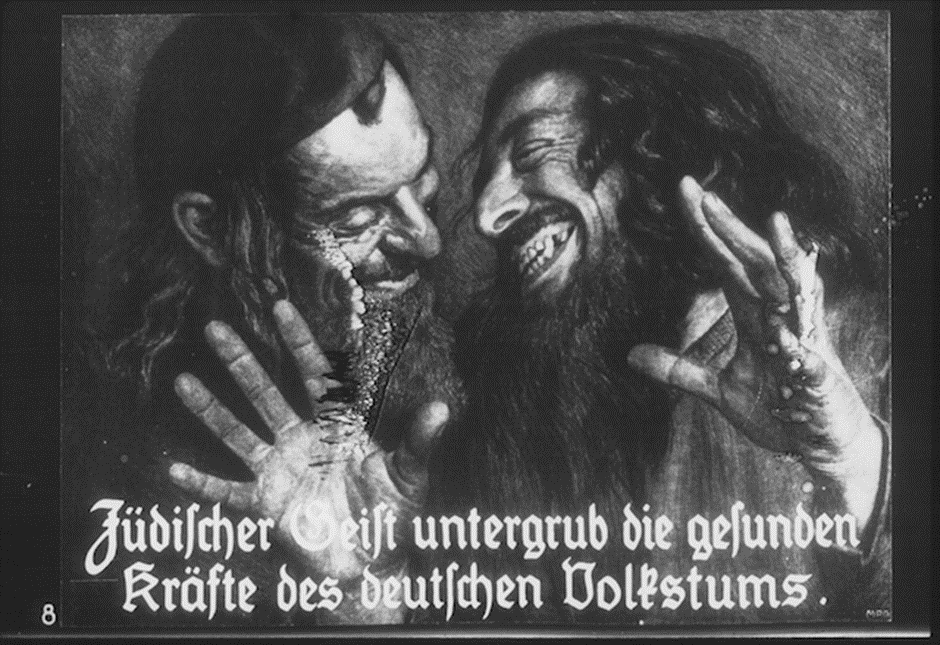
The term fake news became popular in 2017, when Donald Trump claimed that he invented the term. Trump calls things fake news not because they are but because he does not agree with them or they paint him in a bad light, so it is no surprise that he didn’t come up with the term. The term fake news started to be used at the end of the 19th century with newspapers creating sensationalised, deliberate misinformation. But misleading stories, lies and deceit have been around for longer than that. Back in the Roman Empire, false rumours were spread about Christians claiming that they engaged in cannibalism and incest in order to stir up hatred. After the invention of the printing press in 1439, publications became widespread but had no standard of journalistic ethics to follow, news publications ranged from political and religious authorities to eyewitness accounts of merchants. Throughout the centuries that followed, important people in positions of power used fake stories to paint themselves in a positive light, whether it be to gain public support for a war or to attack their opposition in an election. Arguably, the most dangerous form of fake news in the 20th century was the Nazi propaganda machine. The Nazis relied on fake stories about Jews in order to justify the atrocities of the Holocaust. One newspaper told Germans that Jews kidnapped small children before Passover as they needed the blood of a Christian child. With this information being fed from ‘trusted’ sources it is no wonder the German public believed it to be true.
One of the most disturbing cases of fake news via social media I have come across was related to the Manchester bombing in 2017. 22 people tragically lost their lives after a suicide bomber detonated a homemade bomb as people were leaving an Ariana Grande concert. I remember finding out about the bombing on social media. I felt very disturbed and upset having seen snapchat and Instagram stories of people at the concert earlier on in the night. I remember spending hours scrolling through twitter, retweeting posts about loved ones missing. But out of tasteless humour, or an exploitative attempt to gain retweets or followers, some twitter users sent out pleas of help for fictional missing friends and relatives. These tweets ended up mixed in with photos of people who were really missing, creating an underlying layer of scepticism to efforts to spread images of the missing. Additionally, there was a widespread report that a Holiday Inn hotel near the city centre had taken in 50 lost children, which turned out to be fake. This instance is a reminder that social media can be a breeding ground for lies and confusion despite wanting to be a productive source of help in times of crisis.
It is not only social media which is a breeding ground for these fake, sensationalised stories being circulated. I have found it interesting to look at the British papers headlines and compare the way that they are portraying the way the government have handled the coronavirus. In more recent days, the headlines surrounding Dominic Cummings and his blatant breaking of the rules he helped to create (just my opinion, both Dominic and Boris would claim he didn’t, but that’s a whole other story!) I took a course in my final year at uni on the sociology of the media and found that whilst there are journalistic standards that newspapers must adhere to, they often manipulate facts and figures to sensationalise a story. It is important to look at who the newspaper is owned by, what is their agenda and how are they manipulating the information for their own gain.
Traditional newspapers in Britain are viewed by many as a source of accurate news reporting. Credible journalists employed by papers are subject to journalistic standards such as truth, accuracy, accountability and impartiality. Despite this, they all use eye catching headlines and sensationalise stories in order to sell their papers. The bottom line is, that the owners of papers are more focused on profit than they are on having an accurate story. One way articles in papers can be misleading is the statistics they use. Quantitative studies are a great source for journalists but often the figures are distorted and exaggerated in order to tell a particular story. This often occurs with articles on political issues. In a study conducted by YouGov on how politically affiliated UK newspapers are, the Daily Mail was voted the most right wing. At the other end, the Guardian was voted the most left wing. The study overall found that the majority of people in the UK read a right wing daily paper.
Owen Jones, a Guardian columnist has argued that the UK press is largely run by a very small group of right-wing media moguls who defend the status quo of which they are part of. He is not wrong. A very small group of 3 companies dominate 83% of the national newspaper market, with their owners worth billions:
- Rupert Murdoch (owner of News UK: The Sun, The Times and The Sunday Times)
- Richard Desmond (who sold Express newspapers to Reach)
- Viscount Rothermere (owner of the Daily Mail group: Daily Mail, I, Metro)
It is no surprise that these billionaires would want to promote right wing politics and ideologies in their papers rather than left wing politics such as taxing the rich more. The fact that newspapers are highly politicised has led to political smear campaigns. In previous elections they chose a particular party to endorse and exaggerated the policies and figures of their opposition.

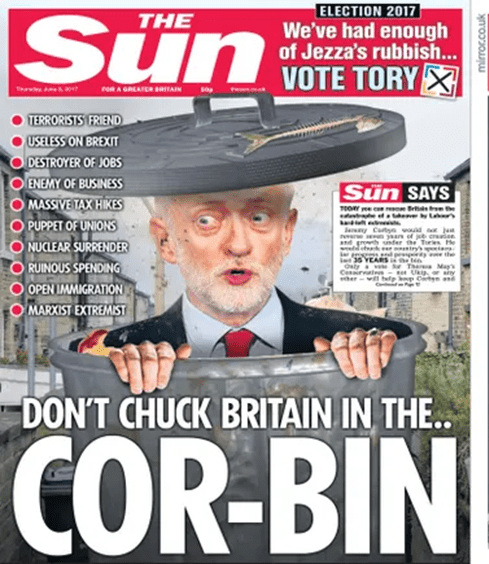
Another example was in the 2019 election and the media output on Jeremy Corbyn, specifically on his alleged terrorist connections and antisemitism. A recent poll taken in December 2019 showed that on average the public believed that a third of Labour party members had been reported from antisemitism, when the actual figure was less than one percent. Whilst Labour’s defeat in the 2017 and 2019 elections was due to several factors, front pages of national papers such as the one below surely influenced the public’s opinion of him. There is no doubt that papers wield considerable power to influence the electorate.
So what can we do about it? We all can’t just go around proclaiming that everything is fake and is a conspiracy. One option is to take back control of media sources. The city of Liverpool has a 30 year boycott of The Sun newspaper. Here you probably won’t see anyone buying, selling or reading the newspaper and for good reason. After the Hillsborough disaster in 1989 in which 96 Liverpool fans were crushed to death, The Sun newspaper printed pages of false claims that not only blamed Liverpool fans for the disaster but accused them of urinating on police officers and other fans, beating up officers and pick pocketing the dead. These reports have since all been proven as fabrication and outright lies. The way in which The Sun reported the story, conspiring to paint the football fans as feral hooligans has meant that the city now boycotts the paper. Other cities are wanting to follow Liverpool with a petition to boycott The Sun in Manchester becoming prevalent after the Manchester bombing, 2017 where the newspaper unsympathetically put the picture of the terrorist next to a victim. Showing a distinct lack of sensitivity and irresponsibility.
Especially in the current period of uncertainty you can overload yourself with information. It is hard to decipher what is fake and what is true but unless you are experiencing something yourself it is impossible to know if something is accurate. Hopefully this post has given you something to think about the next time you look at a crazy headline or a tweet telling you that eating chocolate cures corona! If you really aren’t sure and are confused about something you have read on social media or in a paper there are some helpful links below.
Side note I re wrote this blog multiple times as I felt there was so much content and so many avenues to go down. In recent days protests across the USA have taken place in response to the killing of George Floyd, a unarmed black man, by a white policeman. Information about the protests in different cities and states have been shared via social media and Trump’s tweet ‘when the looting starts, shooting starts’, was hidden by Twitter for glorifying violence. This is yet another example of how powerful social media can be.
As always any comments or suggestions are welcome,
Katie x
https://fullfact.org/about/ – The UK’s independent fact checking charity.
https://today.yougov.com/ – Global public opinion and data company.
http://www.simplepolitics.co.uk/ – Simplifying the world of UK politics.
 Katie's Muses
One reply on “The power of the press…”
You’ve packed a lot in here. I’ll focus on the Corbyn antisemitism charges–which are bullshit and, now that Corbyn’s no longer leading the party have blown away and been forgotten as thoroughly as if they’d never happened. I was amazed at how effective they were. I don’t know if the party, or Corbyn’s allies, could’ve done more to refute them. It just seemed like one of those fights where every approach they took was wrong.
LikeLiked by 1 person