Unless you have been living under a very large rock for the past few months, you will be aware of the pandemic which is coronavirus. I’ve attempted to write this post multiple times but there is so much content and so many avenues to go down that there could be a whole blog on the virus alone! So instead I thought I would focus on the NHS. After the Clap for Carers which happened nationwide on the 26th March, it really made me think about the history of this institution, from it simply being an idea, to the start of privatisation, to the NHS in its current form.
On the 5th July 1948, the National Health Service was born. It was the first time anywhere in the world that completely free healthcare was made available on the basis of citizenship rather than the payment of fees or insurance. It was a culmination of a bold and pioneering plan by the Minister of Health, Aneurin Bevan to make healthcare accessible to everyone. The idea for a free publically owned healthcare service can be traced back to the 1900s. Beatrice Webb, a well-known socialist argued that a new system was needed to replace the ideas of the outdated Poor Law. Before the creation of the NHS, patients were expected to pay for their own treatment, and relief for the poorest in society was given by local parishes and charities.
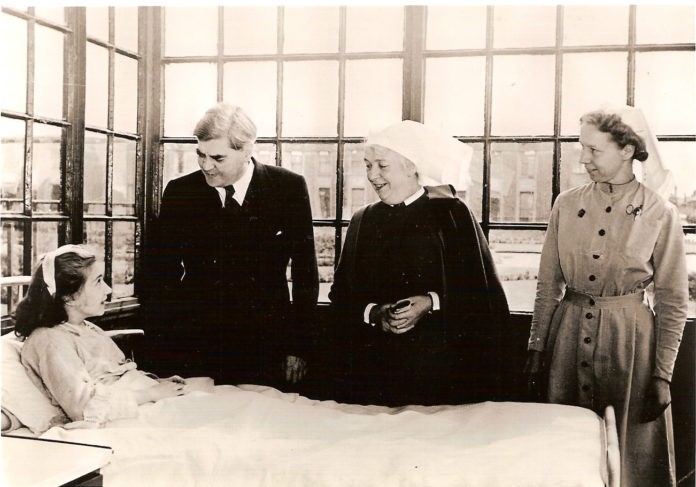
Anenurin Bevan, founder of the NHS, on the first day of the National Health Service on 5 July, 1948.
Not much thought was given to those in the early 1900s who were advocating for a new updated system of healthcare, until the Second World War, which highlighted the issues of the health services in Britain. This prompted the Beveridge Report of 1942 which identified the five great evils in society: squalor, ignorance, want, idleness and disease. There was a recommendation for a new comprehensive health service, which finally took hold when the Labour Prime Minister Clement Attlee came to power in 1945 and the cogs for Bevan’s NHS were in motion. The NHS was built on three core values:
- That the services helped everyone in Britain.
- That healthcare was free.
- The service was based on need rather than ability to pay.
On the first official day 2,751/3,000 hospitals were nationalised- using taxes to fund the services it provided.
However, the NHS which Bevan had envisioned was soon changing and in 1951 he resigned as Health Minister when MPs voted to bring in charges for dental care and prescriptions. Bevan in his resignation letter wrote, ‘it is the beginning of the destruction of those social services which Labour has taken a special pride in’. The prescription charge was abolished in 1965 then reinstated in 1968 and currently stands at £9.15 in England and £0 in Northern Ireland, Scotland and Wales.
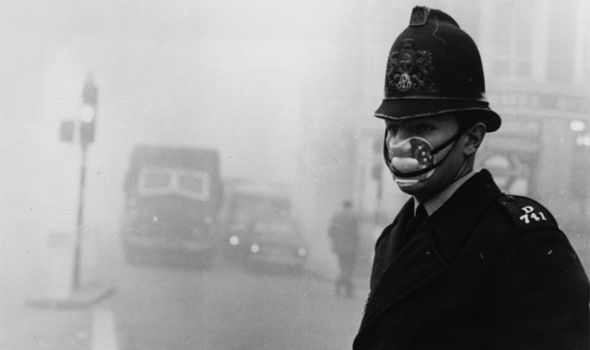
Throughout the 50s and 60s there were substantial developments in the NHS which contributed to rising costs. Due to the changing nature of society, issues were being debated in parliament and there was a huge amount of legislation passed in these decades. When a thick fog engulfed London from December 5th-9th, 1952, it mixed with black smoke emitted from homes and factories to create a deadly smog. Dubbed the Great Smog it killed 12,000 people. The Clean Air Act was enacted by Parliament in 1956 as a response to the high mortality rates of the Great Smog and in response to worsening air pollution in urban areas. The Mental Health Act of 1959 was a huge step in recognizing mental health as being just as important as physical health, with large psychiatric hospitals being closed in favour of community based services.
The women’s movement in the 1960s put emphasis on attaining reproductive and sexual freedom. The contraceptive pill was launched by the NHS in 1961 for married women and became available to all in 1967. In the same year the Abortion Act was passed which made abortion legal on a wide number of grounds in all of Britain (except N. Ireland) up to 28 weeks’ gestation. New drugs came onto the market improving healthcare, including the polio vaccine, chemotherapy and a diphtheria vaccine. These new developments all added to upfront costs, which led to restructuring in the 1970s and 1980s.
The NHS was reorganized in 1973 to bring together services provided by local authorities under the umbrella of regional health authorities. These regional health authorities were responsible for general planning and allocation of resources to areas. A report in 1976 addressed the major inequality between health spending in London and the South East and much lower levels elsewhere.
Under Margaret Thatcher (who was PM from 1979-1990), the government encouraged people to use private medical services. Private providers to the NHS was a way of cutting costs, but downplayed the extent to which this was at the expense of staff and standards of care. In the early 1980s, the Tory objective was to ensure that private contractors secured as many contracts as possible, which was branded privatisation, transferring the NHS services from public to private ownership.
Privatisation attempts accumulated in The National Health Service and Community Act of 1990. This introduced an ‘internal market’. This meant that health authorities became purchasers, they had finite budgets and had to choose where to spend it. They used their purchasing powers to choose between competing providers. It also established ‘GP fund holding’, which enabled GPs to take on budgets and purchase services from hospitals and other providers on behalf of their patients. Critics claimed they created a two-tier health system, whereby patients of some GP fund holders got faster access to health care and where the NHS was starved of the resources it needed with the result that those who could afford to were encouraged to go private, overall undermining the founding principles of the NHS. On the other hand, supporters claimed that the reforms increased efficiency and effectiveness.
Opposition to this became a major feature of Labour’s election campaigns. On the eve of the 1997 election, Tony Blair told voters they had 24 hours to save the NHS, a promise to remove the internal market. In July 2000, an NHS plan set out an ambitious 10 year programme covering everything from hospital food to waiting times. However, in his second term he pursued measures to strengthen the internal market as part of plans to modernise the NHS. Whilst leaving services free at the point of use, his government supported outsourcing of medical services.
The 2010 election saw the NHS in the limelight with David Cameron promising ‘no more top down reorganisation of the NHS’. Two years later the Health and Social Care Act 2012 was passed. Whilst on the outside it was still free at the point of service, buried in the promise of a patient centred NHS, was the opening of the service to new private providers. GPs now controlled the majority of the NHS budget, turning GP practices into small businesses. Overall the NHS was opened up to a competitive private market, potentially leading to cheaper providers providing healthcare, at the cost of quality. Just one example of this is Circle Health, a hedge fund run by a major Tory donor, who has been handed over £1.3 billion in NHS contracts.
A decade later in 2020, the NHS are not only saving and caring for countless lives on a daily basis (broken bones and heart attacks don’t stop for a virus), but they are going above and beyond every day on the front line in the battle against coronavirus. But let’s have a quick look at how a decade of Tory austerity have ‘helped’ our NHS prepare for such a pandemic.
- Since 2010, more than 15,000 beds have been cut from the NHS. Meanwhile, hospitals are crumbling because the Tories have cut around £4.3bn from repair and equipment funds since 2014.
- In 2014 NHS staff went on strike over pay in the first strike for 30 years. This was sparked by the government’s refusal to consider a 1% pay rise for NHS staff.
- In 2016 Junior Doctors went on strike in dispute with the government over longer hours with no extra pay which would put patients’ lives at risk.
- In 2017 there was the abolition of bursaries for trainee nurses. This made training unaffordable to a huge number of people.
- In 2018 70,000 operations were cancelled due to a lack of beds, staff and equipment.
Looking at the history of the NHS, I was shocked at how early the notion of privatisation came into play. It is clear that throughout the different governments that the budget allocated for the NHS was simply not enough and therefore outsourcing of private providers was deemed necessary, at the detriment of the values in which the NHS was found upon over 70 years ago. Now in 2020 when we rely on our NHS more than ever before, it seems ironic that our PM is encouraging us to clap for a service when the last time he clapped for the NHS, it was to block a pay rise for Nurses! It will be interesting to see how the NHS frontline crucial workers are valued and how their pay reflects this as we emerge from this crisis.
Any feedback or suggestions for my next blog would be most welcome!
Katie x
 Katie's Muses
One reply on “The history of NHS…”
Very informative and non judgemental piece
Keep up the good work of informing people of the facts to make their own judgements
LikeLike